


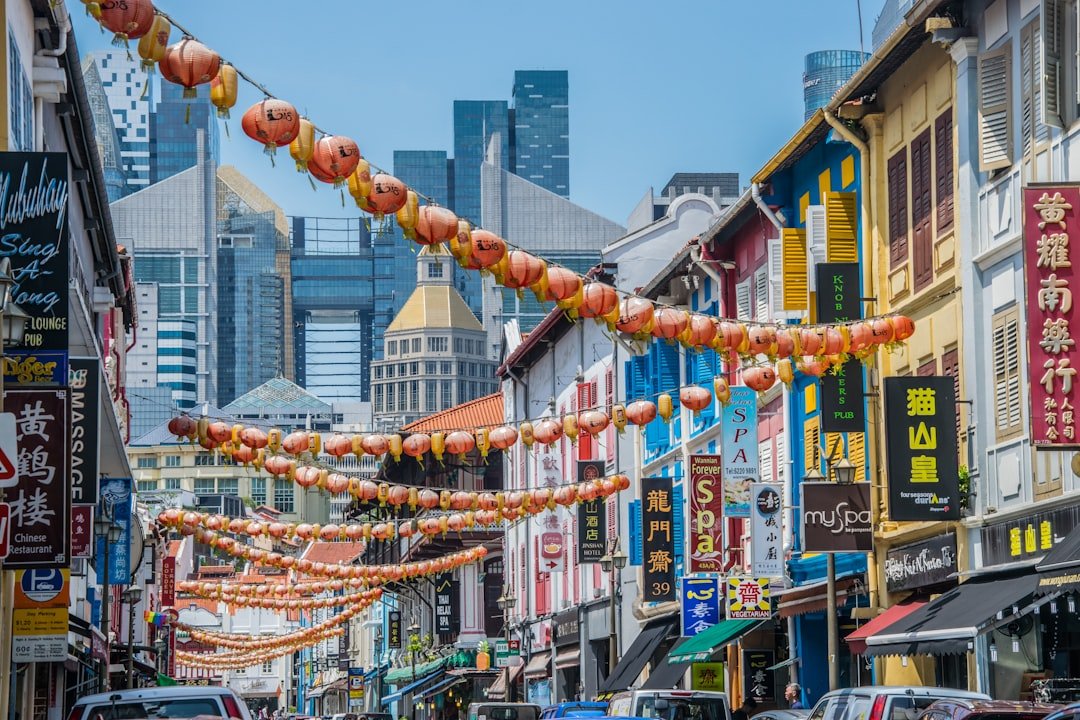
Walk past a massive, green-tiled gate flanked by stone lions, and the sterile glass towers of San Francisco's Financial District vanish. Just like that. Suddenly, you're standing in a wash of color, noise, and incredible smells. Red paper lanterns sway in the breeze. The scent of roasted duck and warm, sweet pork buns hits you instantly. Nearby, the clack of mahjong tiles punctuates a steady stream of Cantonese conversation.
This is SF's Chinatown. Set up back in 1848, it holds the crown as North America’s oldest Chinatown and the biggest Chinese community outside Asia. It's a living, breathing neighborhood shaped by grit, deep history, and community.
Whether you’re a history nerd, a dim sum fanatic, or just an explorer who loves finding tucked-away spots, mapping out your things to do in chinatown will make your trip to San Francisco unforgettable. Lace up your sneakers, skip breakfast, and let's get into it.
—
1. Walk Through the Iconic Dragon’s Gate
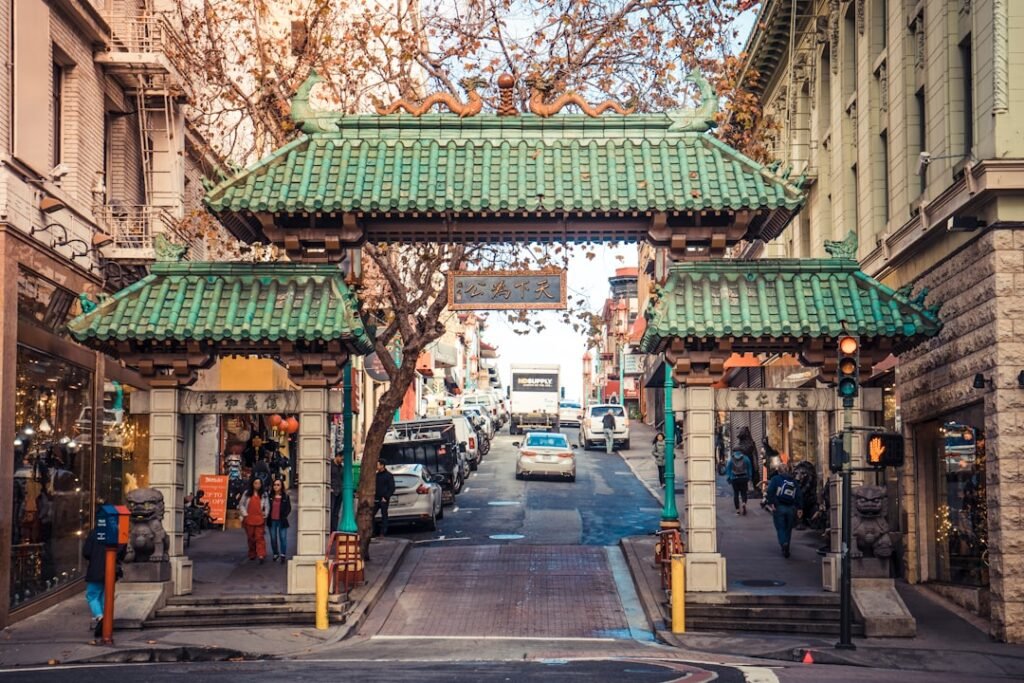
Start your stroll right where the neighborhood officially kicks off: the Dragon’s Gate at Bush Street and Grant Avenue. Most Chinatown arches across the US are wooden. This one? Built in 1969, it uses authentic Chinese materials like stone, concrete, and glazed green ceramic roof tiles.
Check out the three archways when you get there. Historically, the middle arch was only for high-profile VIPs, leaving the two side arches for regular folks like us. Two stone guardian lions (*shi*) flank the entrance to keep bad energy out. Walking through really does feel like passing through a portal into a totally different city.
- Practical Tip: It's a massive tourist magnet. Grab your camera and get here before 9:00 AM if you want a clean shot without twenty other people (and cars) blocking your view.
—
2. Watch Fortune Cookies Being Made at the Golden Gate Fortune Cookie Factory
Head down Ross Alley—a narrow lane that used to host sketchy gambling dens during the Gold Rush days—and follow your nose. You'll hit a tiny storefront smelling of warm vanilla and toasted sugar. You’ve arrived at the Golden Gate Fortune Cookie Factory, where they’ve been hand-folding cookies since 1962.
Walk inside and prepare to be mesmerized. Bakers peel piping-hot, flat waffle circles off a spinning griddle, drop a paper fortune inside, and fold it over a metal rod in seconds flat before the dough cools and snaps. They churn out up to 10,000 of these a day, entirely by hand. Grab a bag of chocolate, green tea, or classic vanilla cookies. You can even write your own custom message and have them seal it inside a giant-sized cookie for a killer souvenir.
- Practical Tip: Walking in is free, but they charge $2 if you want to take photos of the workers. Seriously, just pay the two bucks—it supports a historic local business that’s keeping a dying art alive.
—
3. Climb up to the Historic Tin How Temple
To find the spiritual anchor of this neighborhood, head over to Waverly Place and walk up three flights of creaky, narrow stairs. You'll find the Tin How Temple, founded in 1852. It is the oldest operating Taoist temple in the country.
The temple honors Mazu, the Goddess of the Sea, who watched over early Chinese immigrants on their dangerous ocean crossings. The room hits your senses immediately. Hundreds of red-and-gold lanterns dangle from the ceiling, the air hangs heavy with sweet incense smoke, and alters are stacked with fresh oranges. It is a quiet, sacred refuge that feels lightyears away from the city noise below.
- Practical Tip: Admission is free, but leave a few dollars in the donation box to help keep the place going. Also, put your phone away—photography is strictly banned inside out of respect for those praying.
—
4. Wander Down Waverly Place (The Street of Painted Balconies)
Once you step back outside, take a slow walk down Waverly Place. Known as "The Street of Painted Balconies," this two-block stretch is easily the prettiest street in the whole neighborhood.
With its pastel-painted balconies, old brick facades, and overhead string lights, the street looks straight out of a movie. In fact, you might recognize it from *The Joy Luck Club*. These buildings once housed family benevolent associations and social clubs that helped new arrivals find their footing. It reminds me a bit of checking out historic districts in other parts of the country—kind of like discovering the quirky local history and things to do in Talkeetna on a classic Alaskan trek.
- Practical Tip: For the absolute best angle, stand at the corner of Waverly Place and Clay Street and look up. The vibrant balconies against the sky make for an incredible photo.
—
5. Experience the Local Hustle on Stockton Street
If Grant Avenue is for the tourists, Stockton Street is where real life happens. This is where locals do their daily grocery shopping, and it is a glorious, chaotic sensory overload.
Walk between Sacramento and Broadway, and you'll find yourself dodging shoppers outside open-air markets loaded with piles of dragonfruit, live fish splashing in plastic tanks, and herbalist shops selling jars of dried ginseng and medicinal roots. It’s loud, it’s fast, and it’s completely real.
- Practical Tip: Keep your wits about you. Sidewalks get incredibly packed, and you'll need to watch out for handtrucks and crates of produce.
—
6. Relax and People-Watch in Portsmouth Square
Often called the "Living Room of Chinatown," Portsmouth Square is a concrete park with a massive history. This very spot is where the US flag was raised in SF back in 1846, and where the California Gold Rush was first announced.
Now, it’s a lively hangout for Chinatown’s seniors. Walk through on any afternoon, and you'll see groups gathered around tables playing intense games of Mahjong or Chinese chess (*Xiangqi*). Others practice Tai Chi, while some just swap neighborhood gossip in the sun. If you like budget-friendly travel, spending an hour here is easily on par with finding the best free Branson attractions—it costs absolutely nothing and gives you a front-row seat to local life.
- Practical Tip: There’s a parking garage right underneath the square. It’s not cheap, but if you made the mistake of driving here, it’s one of your easiest options.
—
7. Discover History at the Chinese Historical Society of America (CHSA)
To understand the context of everything you're seeing, visit the Chinese Historical Society of America Museum. It occupies a beautiful old YWCA building designed by the legendary Julia Morgan.
The museum uses powerful exhibits, photos, and artifacts to tell the raw stories of Chinese immigrants who built the railroads and fought systemic exclusion to carve out a life here. They also host great rotating exhibits. I loved their past showcase on martial arts icon Bruce Lee, who was actually born right here in SF's Chinatown!
- Practical Tip: They are open Wednesday through Sunday. Tickets cost about $15, and I highly recommend booking online beforehand to guarantee your spot.
—
Where to Eat in Chinatown: A Culinary Adventure
Let's be honest: you can't plan your things to do in chinatown without planning your meals. The food scene here is legendary, stretching from dirt-cheap bakery counters to high-end banquet halls. Here are the spots you absolutely have to try:
- Hang Ah Tea Room: Hidden down a quiet alley, Hang Ah is America's oldest dim sum joint, serving hungry customers since 1920. Order the steamed pork buns (*char siu bao*), shrimp dumplings (*har gow*), and some crispy spring rolls. It's unpretentious, historic, and incredibly comforting.
- Golden Gate Bakery: If you spot a massive queue winding down Grant Avenue, just get in it. People wait hours for their famous egg custard tarts (*dan tat*). The pastry is flaky and buttery, and the warm, sweet custard center is pure gold. *Just a heads up: the owners are famous for closing down randomly for family vacations, so if the metal shutters are open, consider it your lucky day.*
- R&G Lounge: For a proper sit-down feast, this multi-story spot is a neighborhood institution. You have to order the R&G Special Beef and their signature Salt and Pepper Dungeness Crab. It’s crispy, perfectly seasoned, and worth every penny.
- Li Po Cocktail Lounge: End your night at this neon-lit dive bar, which has been pouring drinks since 1937. Anthony Bourdain famously loved this spot, which is lit by a massive, ancient lantern. You have to get their famous Chinese Mai Tai—it’s a ridiculously strong, sweet mix of rum, liqueurs, and Chinese whiskey that will knock your socks off.
—
Practical Travel Tips for Your Visit
Best Time of Year (and Day) to Visit
San Francisco has famously moody weather, but September through November is usually your best bet for warm, sunny days.
Want to see the neighborhood at its wildest? Visit during the Lunar New Year (usually late January or February) to catch lion dances, firecrackers, and the massive night parade.
For daily sightseeing, aim for mornings (9:00 AM to noon) to see the neighborhood wake up before the tour buses arrive. Most shops open around 10:30 AM.
Getting Around
- Leave the Car Behind: Parking in Chinatown is a nightmare and will cost you a fortune.
- Ride the Cable Car: For the classic SF experience, hop on the Powell-Hyde or Powell-Mason line and jump off near Chinatown.
- Walk (and brace your calves): The neighborhood is compact—only about 24 blocks—so it's easy to explore on foot. But remember, SF is hilly! Streets like California and Sacramento are incredibly steep, so leave the fancy shoes at home. If you've spent any time exploring hilly forest towns—like hunting for fun things to do in Sevierville or hiking around the Smoky Mountains—you'll know how important comfortable footwear is.
—
Catch You in the Neighborhood!
At the end of the day, San Francisco’s Chinatown isn't just a spot on a tourist map. It’s a living monument to survival, a feast for the senses, and a massive piece of the American story. From the sweet smell of fresh fortune cookies to the quiet incense smoke of a century-old temple, this place stays with you long after you leave.
Have you made the trip yet? What was your absolute favorite dim sum dish, or did you find a quiet corner of the neighborhood that stole your heart? Let me know in the comments—I’d love to hear your stories!