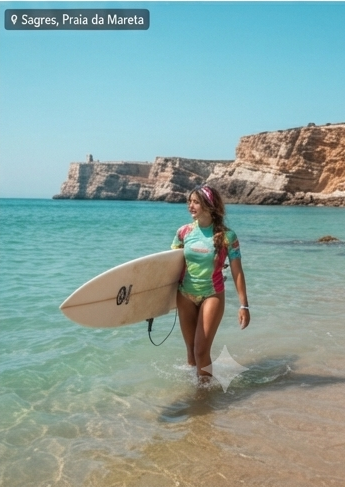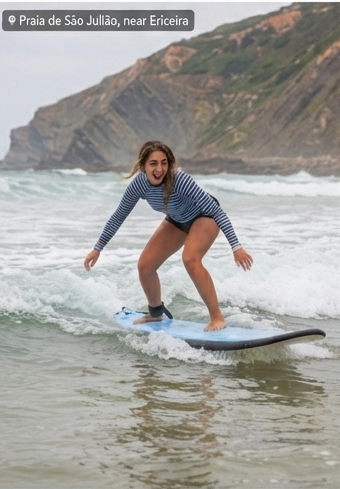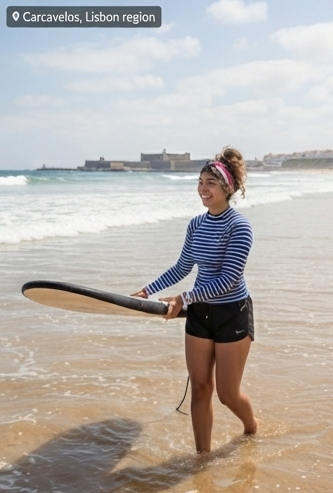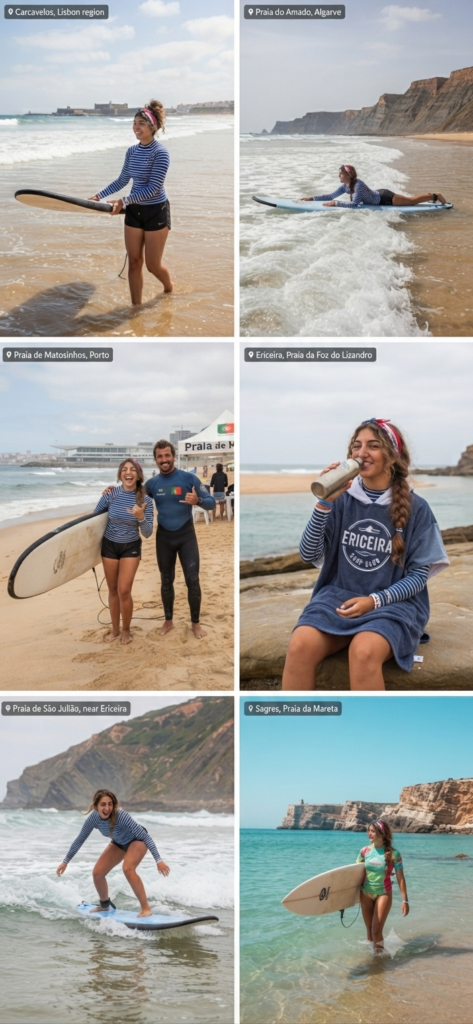


Find out the top surf beaches in Portugal to be a beginner with precise prices, travel tips, and local tips to plan your first surf beach trip.
Introduction
Portugal has some of the most welcoming surf locations in the world as a first-time surfer with their favored long sandy beaches, consistent gentle swells and their surfing schools are of low costs, so in this post I will demonstrate the particular first-time surfers beaches to visit as well as the planning that needs to be done concerning the beaches. This phrase, best surf beaches in Portugal to start out with, just comes out in the flow of the guide, which is a mix of local logistics, tips of your own, and steps to be taken to get you standing up on your first wave.
[mappress mapid=”2″]
Best entry level beaches (rapid list)
- Praia do Amado (Algarve) – regular beach break, numerous schools.
- Saumes (Alentejo): massive, kindly surf, ample line up.
- Praia do Baleal / Peniche (Central Portugal) – bays with protection against the learners.
- Praia da Figueira da Foz (Silver Coast) – enormous sandbars, gentle waves.
- Matosinhos (Porto area) – beach nearby the city that has surf installations.
- Ericeira – Foz do Lizandro & Praia do Sul (beginner-friendly surfing areas adjacent to world-class surfing).
Why these beaches
All of these locations provide three essential beginner requirements: smooth long rolling waves; a sandy bottom (there are no reefs); and options of surf schools as well as board rentals. Such qualities qualify them as the most reasonable in the quest to establish the best surf beaches to begin in Portugal.
Planning necessities – costs, time, how to arrive
Costs (an average estimate per-person)
- Group beginner lesson (2 hours): €25-45 season- and place-specific.
- Private lesson (1–2 hours): €50–€90.
- Board rental (day): €12-25 (soft-top beginner boards are cheaper than the others).
- Wetsuit rental (for the day): €6-12 (thicker suits are more expensive during winter).
- Budget guesthouse / surf hostel (per night): €20–€50; mid-range hotel: €60–€120.
- Surf camp (7 days, all-inclusive): €350–€850 depending on inclusions, and season.
All of these prices indicate how affordable the surf scene is in Portugal and allow you to compute an achievable trip budget.
The most appropriate time to visit (seasonality)
- Spring (March-May): it is cooler, there are fewer people, the swells are always consistent, and many days are gentle, so it is great to get starting.
- Summer (June-September): hottest with fewer windswell days, beaches are often busy but beginner bays are often sheltered and working.
- Autumn (September to November): The big swell season starts but sheltered beaches and onshore winds make it easy to have many days of great instruction; crowd dies away after August.
- Winter (December-February): Lowest water and highest swells – most beaches are advanced only but schools still work sheltered.
In the majority of learners during late spring, early autumn, the warm air tempers with approachable waves and opportunities of training.
How to get there – details about transportation
- From Lisbon: Peniche/Baleal ~1h20 by car (100–120 km); Ericeira ~45–50 min (50 km); Figueira da Foz ~2.5–3h (200 km). Buses and trains can link Lisbon to the towns of the coastline but car or organized transfer is quickest to get boards.
- Porto: Matosinhos (metro/bus 15–20 min); Figueira da Foz (1.5–2h by car); Nazaré (1.5–2h). The public transport of Porto is good to the city beaches; more distant locations can be reached by car.
- From Faro (Algarve): Praia do Amado and Sagres ~1-1.5h drive along the west coast. Faro Airport serves Algarve towns; buses are available, but it is easier to reach them by a rental car or shuttle.
- Inter-regional buses (Rede Expressos, FlixBus) and regional trains are not the most expensive options but verify the schedule about the possibility to carry a surfboard.
When you are going with your own board, make sure to check airline surfboard charges well in advance – with some low cost airlines, they can be huge.
Read: Travel Ideas From Evansville Indiana 15 Best Trips Near You
Popular beaches — the descriptions, tips and personal remarks
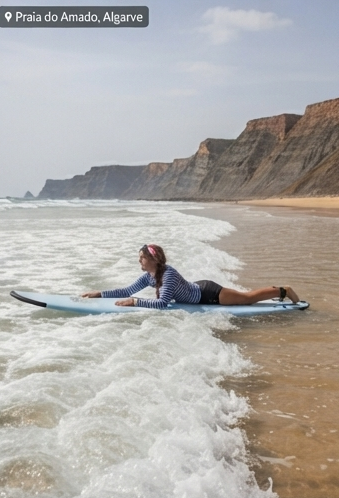
Praia do Amado (Algarve)
- What is good about it: Long peeling waves, wide sandy beach, several surf schools that are located close to the car park.
- Parking: Parking is provided, but it fills up during the summers, and surf schools provide group lessons and soft-top boards.
- Personal advice: Have a post-afternoon lesson when the wind tends to lilt and teachers spend one-on-one time; carry reef-safe sunscreen.
São Torpes (Sines / Alentejo)
- Why it’s good: Long, right and left beach break with easy takeoffs to practice paddling and pop-ups.
- Granular logistics: The atmosphere of the small town, cheap surf lessons, space to train.
- Personal suggestive idea: Early morning should be given a chance in case of a glassy condition and near empty lineups.
Baleal (Peniche)
- Reasons why it is good: There are various beach choices around the peninsula that offer shelter to learners in most of the directions of swell.
- Domestic logistics: Peniche is home to numerous surf camps, numerous rental outlets, and close to Lisbon.
- Instructional hints: To get a softer break walk the north-side coves; look out at rip channels and inquire of instructors where good places are to enter.
Figueira da Foz
- Reason it is good: The sandbars are long and form forgiving rolling waves which give the chance of rides that can be repeated and slow – this is good especially when one is a first-time surfer.
- Domestic transportation: Train connection with Coimbra and Porto; a combination of low-cost accommodations and cafe trips.
- My advice: Standing on the sand is the easiest place to start first – there is plenty of space to get used to your standing in dry water before you get into the water.
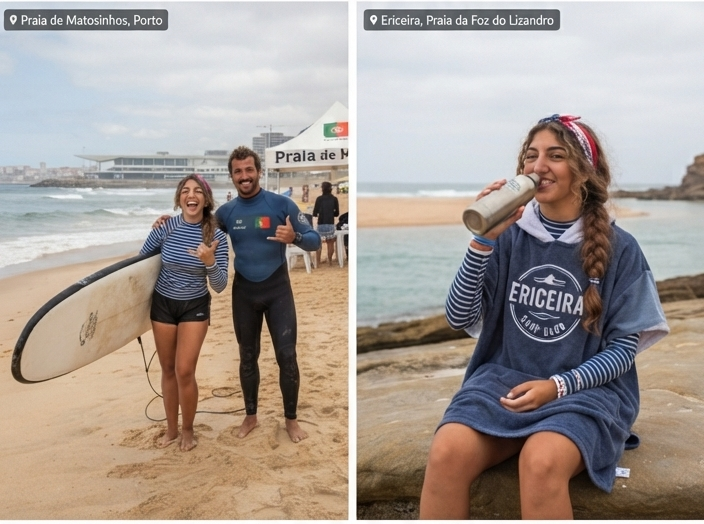
Matosinhos (Porto)
- Why it is good: Matosinhos has easy-to-reach lessons and rentals available to the city so it is a good choice of a spot to learn when going on a surf and city trip.
- Local logistics: Metro central Porto, good evening surf, numerous surf shops.
- Personal hint: Book weekday lessons so as not to be caught in the city crowds on weekends.
Ericeira – Foz do Lizandro – Praia do Sul
- Why it is good: Ericeira is a global surf reserve, and has beginner sectors near their town.
- Local logistics: Numerous surf schools, quality camps, and a small town with cafes and gear stores.
- Personal suggestion: Begin in Foz do Lizandro; the place is usually less busy than the well-known reefs, and imparts important lessons in wave-reading.
Comparison table – beginner beaches at-a-glance
| Beach / Area | Best months | Avg lesson cost (group) | Ease of access | Best for | |—|—:|—:|—|—| | Praia do Amado | May-Sep | €30-45 | Car: Faro (about 1h) | Organized surf camps, constant waves. | | São Torpes | Apr–Oct | €25–€40 | Drive from Lisbon ~1.5h | Long rides, quiet lineups | | Baleal (Peniche) | Mar-Oct | €25–45 | 1h20 drive Lisbon | Mix of sheltered breaks | | Figueira da Foz | Apr-Sep | €25-40 | Train/car Porto | Long sandbars to repeat | | Matosinhos | May-Sep | €20-€35 | Metro in Porto city center | City trip and surfing. | | Ericeira (Foz/Praia do Sul) | Mar-Oct | €30-50 | 45-60 min out of Lisbon | Advanced to basics progression |
Safety and etiquette
- Surf school or lifeguard: always enquire with a local lifeguard or surf school before going out. Local experience avoids being sucked into rips or swimming where boats or swimmers gather.
- Right of way in the queue: the surfer nearest to the breaking portion of the wave has right of way; summon attention with a motion of the pointing finger before surfing a wave.
- Use leash and right wetsuit thickness, in summer 3/2 mm is the usual thickness, in winter 4/3–5/4 mm and booties could be necessary.
- Sound judgment and a simple first-aid kit: insignificant cuts and board hits are usual in acquisition of the essential knowledge on crowded beaches.
Original tips (E-E-A-T emphasis) and personal experience
- Authentic note: During my first multi-day surf trip to Peniche, repeating small pop-ups on sand in between sessions was the biggest step-change; the instructors were delighted with the additional repetition and I stood up regularly by the third day.
- Hint: lessons around local tides – most Portuguese beginner beaches are most dependable on the natural rise and fall of tides; sandbars on such beaches will have foreseeable peaks; teachers will know the precise windows.
- Gear: Select a soft-top board during the first months – it is easier to use and schools will often provide them, as soon as you can grab unbroken waves regularly, you can consider upgrading to rent a foam-to-rigid hybrid that will allow you to advance.
- Budget suggestion: Reserve group lessons and board rents together at the hostels or surf camps you will generally save 10-20 per cent and have the option to reschedule in the event of bad weather.
Pre-checklist before you leave
- Pack a travel adapter, reef-safe sunscreen, rash vest to wear during long practice periods and ear drops used for ear and hair that are surf specific in case you are a sufferer of swimmer’s ear.
- Reserve or book lessons or camps, July-August in line with popular beaches.
- Surf forecast (wind, swell direction, tide) the day before and in the morning, and go to a beach that will be easy to learn, even the slightest error can make a once-easy beach a day to avoid.
- Teach basic rip current escape: remain calm, float across the rip sideways until in calmer water and swim back to land.
People Also Ask (PAA)
Q: What is the best Portuguese beach for absolute beginners?
Totally uninitiated learners are advised to visit sheltered and sandy beaches such as Praia do Amado, the coves of Baleal or Figueira da Foz, which provide long-rolling, gentle waves and which have several schools willing to instruct and teach safety and fundamentals.
Q: What is the number of lessons needed to stand up?
With practice and small waves, most learners are able to stand on a soft-top in one to three lessons; regular practice between water sessions propels the rate of success.
Q: Do I have to have my own board and wetsuit?
No – there are respectable surf schools who offer soft-top boards and wetsuits. It could be worth it later to bring your own board to progress but this adds travel expenses; having your own wetsuit can be convenient but is unnecessary.
Q: Is Portugal very costly to get on a surf trip?
Portugal is still relatively cheap versus most of the European surf destinations; you can expect reasonably priced surf instruction, cheap hostels and plenty of options in terms of accommodation to suit most budgets.
Actionable call-to-action
- First week: Book one lesson of group surfing in one of your selected beaches and book a surf-friendly hostel or surf camp (3-7 days of lessons and equipment rentals).
- Review 7-day forecast, beach-specific, and set tide windows with school.
- Fly to Praia do Amado (when flying to Faro) or Baleal/Peniche (when flying to Lisbon) as the first destination – these are the most accessible, can be taught to and have very accessible waves that are gentle to a beginner.
Closing note
The combination of consistent surf ideal waves, welcoming surf culture, and low costs in Portugal can make Portugal an ideal choice when someone is in search of the best surf beaches in Portugal. Begin with a structured lesson, re-do pop-up exercises on sand and choose a low-key beach in spring or the end of summer when the water is calmest to begin as an intro to surf life. Would you like a 3 day sample itinerary of one of these beaches?